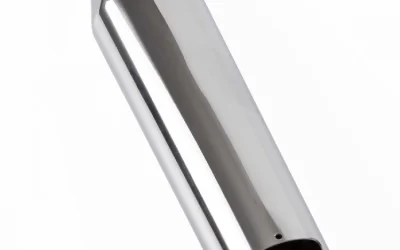
The food sector is governed by a categorical imperative: hygiene. Every metal component that comes into contact with food or beverages must not only be made from suitable materials (such as stainless steel) but must also meet extremely high surface finish standards. The challenge lies in maintaining these standards even when tubes or profiles are processed, deformed, or welded.
The production of compliant food industry equipment is therefore not optional, but a key factor in ensuring consumer safety and production efficiency. In this article, we will explain why the design and construction of molds, welding fixtures, and various food industry equipment are crucial for the sector, and how they solve problems related to low surface roughness even on the most complex geometries.
Low roughness: a crucial aspect for hygiene
In the food industry, a smooth surface is synonymous with safety. The key parameter is surface roughness (often expressed in Ra), which must be kept extremely low. This is essential because it ensures:
- Bacterial prevention: Rough or porous surfaces can trap food residues, liquids, or bacteria, making cleaning processes ineffective and promoting microbial growth.
- Corrosion resistance: A high-quality surface finish protects stainless steel from chemical corrosion caused by aggressive detergents and acidic substances.
Ensuring low roughness on a straight or bent tube is relatively simple. The real challenge arises when the component must be deformed, welded, or joined. Welded joints represent one of the main risk areas, as they can create surface discontinuities that are difficult to sanitize.
These processes introduce stress into the material and require strict control to avoid compromising the surface finish while reducing critical points along the component.
For this reason, in more advanced applications, components are designed to limit or eliminate welds, maintaining material continuity.
Food industry equipment and roughness control
Food industry equipment must ensure surface roughness values below Ra 0.8 µm, a commonly required threshold for components in contact with food. Above this limit, the risk of microbiological contamination increases significantly.
Achieving these values on straight tubes is relatively straightforward. The critical issue arises when the component is deformed or processed.
How processing affects surface roughness
During bending, deformation, or welding, the material undergoes micro surface variations. Without dedicated equipment, these alterations can lead to:
- invisible micro-porosity;
- surface discontinuities;
- localized increases in roughness.
Food industry equipment can also be designed to support controlled tube deformation processes, allowing complex geometries to be achieved without intermediate joints.
This approach preserves the original surface finish and avoids the typical issues associated with welding, while also improving the cleanability of the component.
The role of tooling: maintaining quality during fabrication
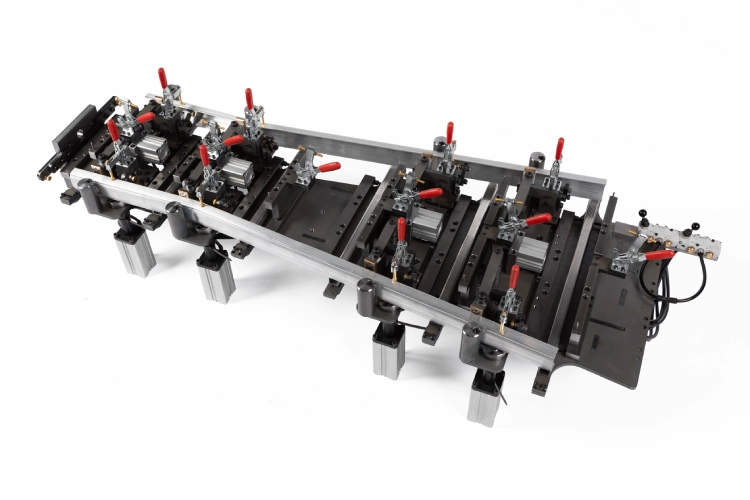
The food industry equipment we develop at Ricos is designed to address the real critical points of the process: deformation and material continuity.
The goal is not to “fix” issues downstream, but to prevent them upstream.
Through controlled bending and deformation technologies, it is possible to:
- maintain surface continuity of the tube;
- avoid micro-cracks and localized stress;
- preserve the finish even on complex geometries.
In this context, food industry equipment is not only about ensuring precision, but also about rethinking the component itself.
By leveraging advanced bending and deformation technologies, it is possible to produce continuous tubular elements, reducing or eliminating welded joints.
This provides a concrete advantage because it:
- eliminates potential bacterial growth points;
- improves internal flow continuity;
- reduces post-processing operations.
It is not just about processing a tube, but about designing a geometry that already meets hygienic requirements.
The end customer must be able to rely on components that maintain low surface roughness even at bends or cross-section changes. Our equipment is engineered to ensure that tubes retain their surface and dimensional integrity throughout the manufacturing process.
Welds suitable for food contact
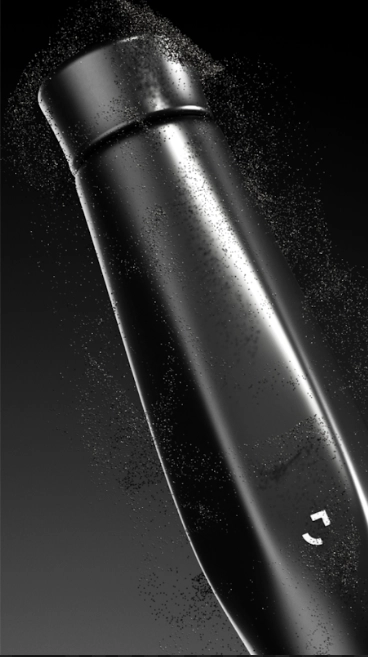
In advanced applications, the goal is not to improve welding, but to avoid it whenever possible.
Food industry equipment can be designed to enable the production of components formed from a single tube, eliminating the need for joints and drastically reducing contamination risks.
When necessary, however, equipment must support the creation of joints compliant with Sanitary Design principles.
Technical requirements for welds
A weld suitable for food contact must ensure:
- absence of porosity;
- surface continuity;
- full joint penetration.
Joint quality is not only structural but above all hygienic: any discontinuity can become a point of bacterial accumulation.
Why reducing welds is the best choice
In the food sector, the most effective strategy is not improving welding, but reducing the number of welds.
Thanks to advanced deformation technologies, complex components can be produced from a single tube, avoiding intermediate joints and improving:
- component cleanability;
- internal flow continuity;
- long-term reliability.
Food industry equipment and Sanitary Design
Food industry equipment is one of the key elements for practically applying hygienic design principles (Sanitary Design). It is not just about complying with regulations, but about designing components that are inherently easy to clean.
Impact on production performance
The use of dedicated equipment allows to:
- standardize surface quality;
- reduce variability between production batches;
- minimize post-processing finishing operations.
This approach improves not only hygienic compliance but also overall process efficiency, reducing time and operating costs.
Why invest in custom food industry equipment?
Relying on a partner specialized in manufacturing food industry equipment offers benefits that go beyond a single project:
- Regulatory compliance and repeatability: Equipment designed for hygienic tolerances helps your company meet strict standards and food safety regulations over time, thanks to perfect component repeatability.
- Waste reduction: Equipment significantly reduces alignment errors, lowering scrap and rework costs.
In summary, the development of food industry equipment is a direct investment in the quality, safety, and efficiency of your production process, essential for competing in a sector where hygiene is non-negotiable.
Do you have a project to develop? Contact us.