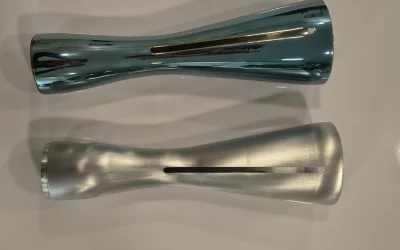
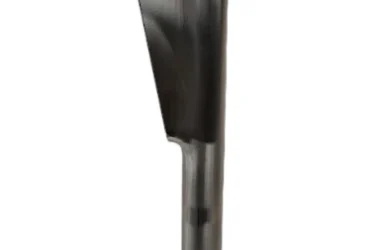
At the heart of an industrial furnace, or any system requiring efficient thermal transfer, lies a critical component: the heat exchanger. This is not a simple structure, like a domestic radiator, but a complex technical setup, often subjected to high pressure and extreme temperatures. Its efficiency, and above all, its safety, depend entirely on the quality of construction and the integrity of its tubes.
If your company is involved in the manufacturing of industrial furnaces, you know well that relying on a generic supplier is not an option. You need a partner who can transform a simple tube into a high-performance component, with the guarantee of an impeccable seal. In this article, we explain in detail how we approach the manufacturing of tubes for heat exchangers, from heavy-wall tubing to final certification.
Heavy thickness and complex shaping
Heat exchangers for industrial furnaces are a cross between a high-pressure manifold and a technical radiator. They are designed to withstand considerable thermal and pressure loads, such as the injection of heated steam.
To sustain such conditions, tubes for heat exchangers require stringent specifications that often go beyond the standard: namely, heavy thickness and complex shaping. The structure, in fact, must be robust to withstand high steam pressure and continuous thermal expansion. Furthermore, to optimize heat exchange within the limited space of the furnace, the tubes must be shaped into coils or complex configurations. To achieve these specific forms, our technical office studies the necessary thickness, materials, and deformation techniques, to guarantee the result you expect.
The welding process

When working with tubes for heat exchangers that are heavy-walled and intended for high pressure, welding is no longer just a joining method, but the core of the component’s safety. Our experience in high-pressure piping allows us to manage the welding so that the joint is as strong as the tube itself, eliminating the risk of rupture or leakage. We use high-precision welding, in fact, to ensure that the bead is homogeneous and robust, essential for holding high-temperature and high-pressure steam. We also design custom welding jigs to ensure that every piece is welded exactly like all the others, with the same precision.
The hydrostatic test
Welding is the crucial phase, but the ultimate proof of the reliability of tubes for heat exchangers is the hydrostatic test.
Before delivery, every welded exchanger is subjected to rigorous leak tests. We subject the tubes to operating pressures higher than those they will face in the furnace, verifying that there are no micro-leaks and that the integrity of the joint is total.
This step is our signature: we deliver tubes for heat exchangers that have not only been competently constructed but have also been internally certified for high pressure, reducing your risks and testing times.
Why choose us?
By relying on our experience in the fabrication of tubes for heat exchangers, you gain direct benefits for your production line, which we have summarized in a brief list below:
- Optimized costs: Our ability to provide the customized solution—including welding, model, and testing—eliminates the additional costs and margins typical of purchasing standard components.
- Perfect shaped solutions: We create the complex shaped structures necessary for thermal efficiency by studying the necessary deformations, ensuring that assembly in your furnace is fast and free of inaccuracies.
- Single partner: We manage the entire supply chain, transforming a simple heavy-wall tube into a ready-to-use technical radiator. In this way, you only need to interface with one company, reducing time and stress.
Are you a company that manufactures industrial furnaces and needs tubes for heat exchangers?
Contact us to discuss your project and discover how we can supply you with tubes for heat exchangers that are shaped, welded, and tested to excel in the most extreme conditions.