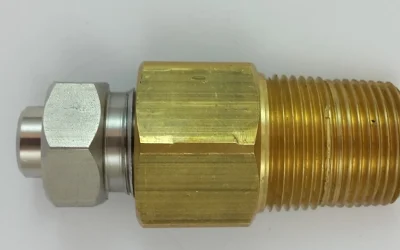
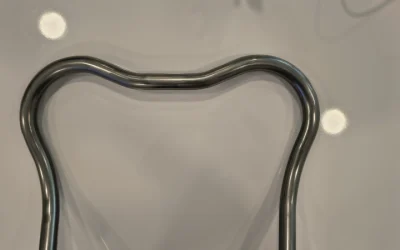
The ITER fusion energy project represents one of the most ambitious technological challenges on a global scale and also involves advanced industrial expertise based in Italy. In the field of nuclear fusion, where precision, reliability, and component quality are essential, every design detail becomes critical.
In this context, our company contributed its know-how in metal tube processing, developing specific solutions for highly complex applications where tolerances are extremely tight and performance requirements go far beyond standard industrial parameters.
What is the ITER project and what are its main objectives?
The ITER fusion energy project is part of an international initiative aimed at demonstrating the feasibility of nuclear fusion as a sustainable, safe, and virtually limitless energy source. ITER (International Thermonuclear Experimental Reactor) was created with the goal of replicating on Earth the same process that powers the Sun, generating energy through the fusion of atomic nuclei.
The ITER fusion energy project involves the European Union, the United States, China, Russia, India, Japan, and South Korea, with the main site located in Cadarache, France. The objective is to produce more energy than is required to initiate the process, paving the way for a new generation of power plants.
In this context, every component must meet extremely rigorous standards in terms of both mechanical strength and joint quality, making the contribution of companies specialized in advanced material processing essential.
Which European companies participate in the ITER project?
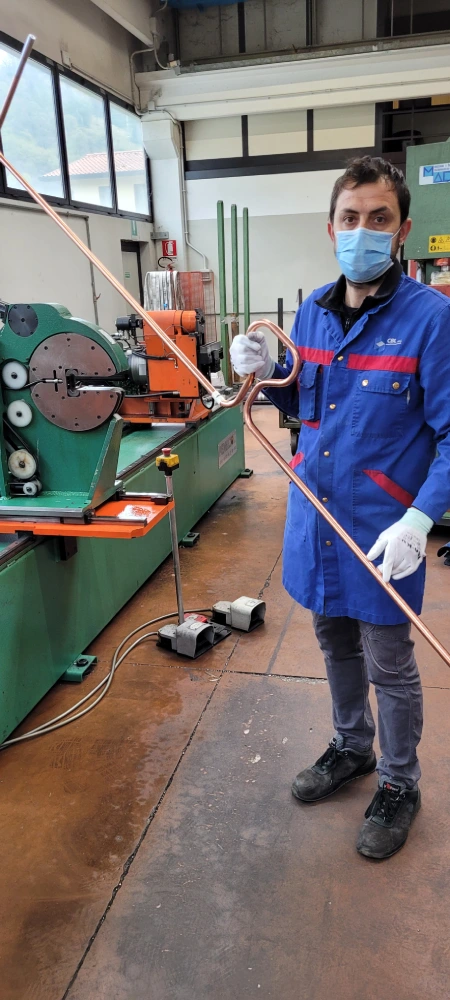
The ITER fusion energy project includes the participation of numerous highly specialized European companies operating in advanced mechanics, plant engineering, and material processing. Italy is one of the project’s main European contributors, thanks to an industrial network capable of handling highly complex and high-precision manufacturing processes.
At Ricos, we operate within this framework as a technical partner in the processing of tubular components made from Copper Chromium Zirconium and nickel, contributing in particular to tube bending and the extrusion of fittings for orbital welding directly on the tubes, up to the preparation of geometries optimized for joining processes.
The added value lies not only in production itself, but in the ability to integrate design and manufacturing processes, developing solutions and equipment for the most critical stages of component production.
Ricos’ contribution: tube extrusion for aerospace and nuclear applications
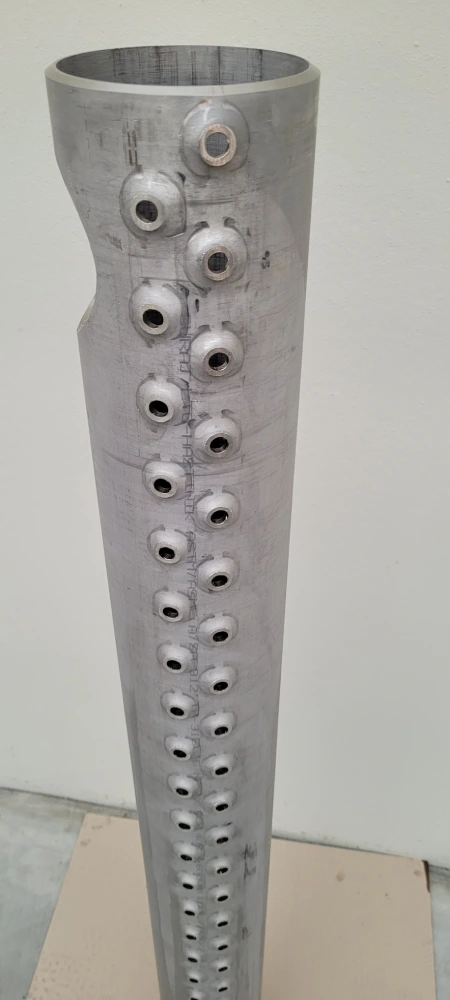
For Ricos, the ITER fusion energy project required the development of specific solutions for tubular components intended for ultra-high-performance environments. In particular, we worked on tube extrusion processes designed to facilitate subsequent joining and orbital welding operations.
The goal was to achieve precise and controlled geometries that would allow perfect component alignment while minimizing welding defects. This approach improves:
- joint quality;
- structural continuity;
- repeatability of the production process;
- the possibility of guaranteed orbital welds (which can undergo non-destructive testing – NDT – through X-ray inspection).
In applications related to nuclear fusion, the quality of tube preparation is just as important as the welding process itself.
The technical challenge: extrusions beyond the limits of traditional machining
The ITER fusion energy project introduced a significant technical challenge: producing tube extrusions with heights exceeding 10 mm, dimensions that are difficult to achieve using traditional machining methods.
Technologies such as T-drill systems or standard extrusion tools present major limitations:
- they locally modify the material properties;
- they do not guarantee the required geometry;
- they introduce structural criticalities;
- they cannot extrude significant thicknesses.
We adopted deformation processes using tools developed internally, enabling us to modify the tube while maintaining material continuity and guaranteeing the required geometric precision.
This approach allows complex extrusions to be achieved without compromising the mechanical properties of the component.
Integration between extrusion and orbital welding
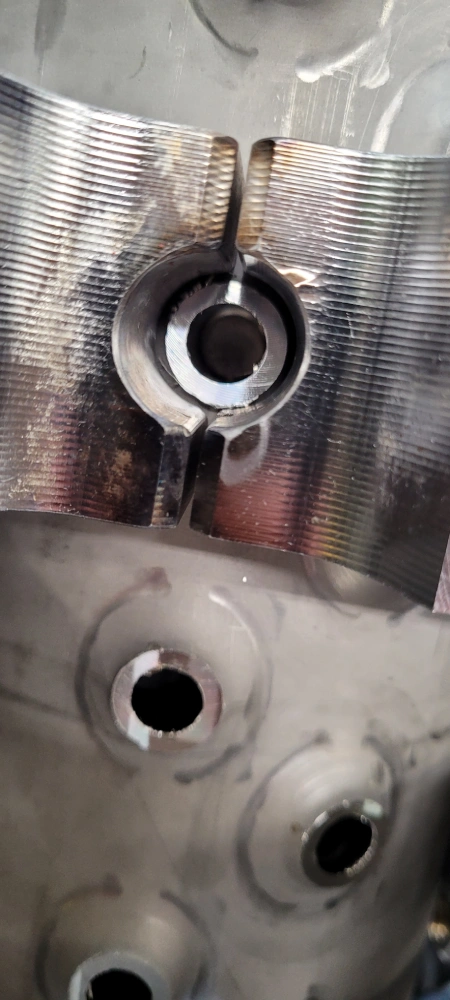
What key principle does the ITER fusion energy project highlight? It demonstrates that welding quality begins with the quality of the starting component.
The extrusion processes developed by our company are specifically designed to optimize the orbital welding phase, reducing critical issues such as:
misalignments;
lack of penetration;
welding bead defects.
Correct geometry makes it possible to fully exploit the precision of automated processes, improving the reliability and performance of the final system.
You can learn more about this topic in our article dedicated to tube extrusion and orbital welding.
An integrated engineering approach
The ITER fusion energy project demonstrates how, in the most advanced industrial environments, it is no longer enough to simply “manufacture a component”; it is necessary to engineer the entire production process.
At Ricos, we work precisely in this direction by integrating:
- industrial design;
- tube processing;
- advanced deformation technologies;
- quality control.
This approach makes it possible to anticipate critical issues and develop solutions already optimized for the following production stages, reducing errors and reworking.
From complexity to precision: industrial value
The ITER fusion energy project is a clear example of how technological complexity can be managed through specialized expertise and integrated processes.
The ability to manufacture tubular components with advanced geometries and tight tolerances makes it possible to:
- improve plant reliability;
- guarantee production continuity;
- comply with extremely strict international standards.
In this context, tube extrusion is not just a manufacturing process, but a strategic driver for the overall quality of the system.
Contact us for your project
If you are developing a project in the fields of:
- energy;
- aerospace;
- plant engineering;
- oil & gas;
- high-precision applications.
our team can support you in developing tubular components designed to guarantee quality, reliability, and production continuity.
Contact us to analyze your project and develop the most suitable solution together!