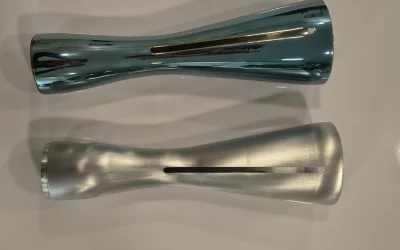
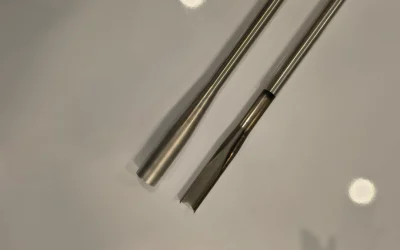
Metal tube extrusion is one of the most strategic processes when it comes to weld joint quality. In industrial contexts where precision, cleanliness, and strength are non-negotiable requirements, properly preparing the tube before welding is not a detail, it is a critical factor.
Extrusion of a tube makes it possible to achieve controlled geometries, uniform wall thickness, and surfaces optimized for orbital tube welding. This means fewer defects, improved weld penetration, and structural continuity even in critical applications.
When working on fluid systems, high-pressure plants, or high-purity sectors, weld quality cannot rely on welding alone. Read on to discover how it is engineered from the start.
Metal tube extrusion: why it is essential for orbital weld quality
Metal tube extrusion allows for a perfectly controlled cross-section, eliminating irregularities that could compromise orbital tube welding quality.
In orbital welding processes, the joint must be perfectly aligned: even minimal geometric discontinuities can lead to defects such as:
- lack of penetration;
- misalignment;
- inclusions or porosity.
Orbital welding is a highly precise automated process in which the torch rotates around the tube, ensuring uniformity and repeatability of the weld bead. However, this precision can only be fully exploited if the starting component is flawless.
That is why extrusion is not just a production step, but a direct lever on final weld quality.
How does the tube extrusion process work?
Extrusion of a tube is a process in which material is forced through a die to obtain a precise and continuous cross-section.
For metal tubes, this means:
- consistent wall thickness along the entire length;
- uniform cross-section;
- reduced surface discontinuities.
Unlike other processes (such as longitudinal welding or rolling), extrusion produces tubes with more homogeneous mechanical properties and greater geometric stability.
This becomes crucial when the tube is later processed, bent, or welded using high-precision technologies.
Orbital tube welding: why it requires perfect preparation
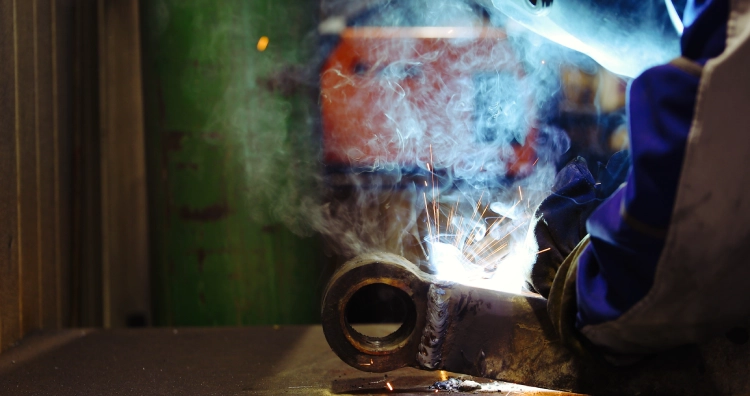
Orbital tube welding is a standard in industries where joint quality is critical: pharmaceutical, food, energy, oil & gas.
This automated process ensures:
- uniform and repeatable welds;
- high metallurgical quality;
- absence of contamination;
- reduced human error.
However, weld success strongly depends on joint preparation.
Parameters such as tube concentricity, surface flatness, and dimensional tolerances must be precisely controlled. Even a slight misalignment can compromise the entire system.
This is where metal tube extrusion becomes essential: it provides a stable and consistent geometric starting point.
From extruded tube to perfect joint: the role of downstream processes
Metal tube extrusion alone is not enough, it must be integrated with precision machining processes to prepare the component for orbital welding.
Key operations include:
- high-precision laser cutting;
- tube end preparation;
- machining for structural fit-up
dimensional inspection;
Each step contributes to building a perfect joint.
As highlighted in orbital welding processes, final quality depends on perfect tube preparation, surface cleanliness, and accurate fit-up.
In advanced industrial contexts, these processes are not isolated, they are integrated into a single production flow.
Defect reduction: what really changes with extrusion
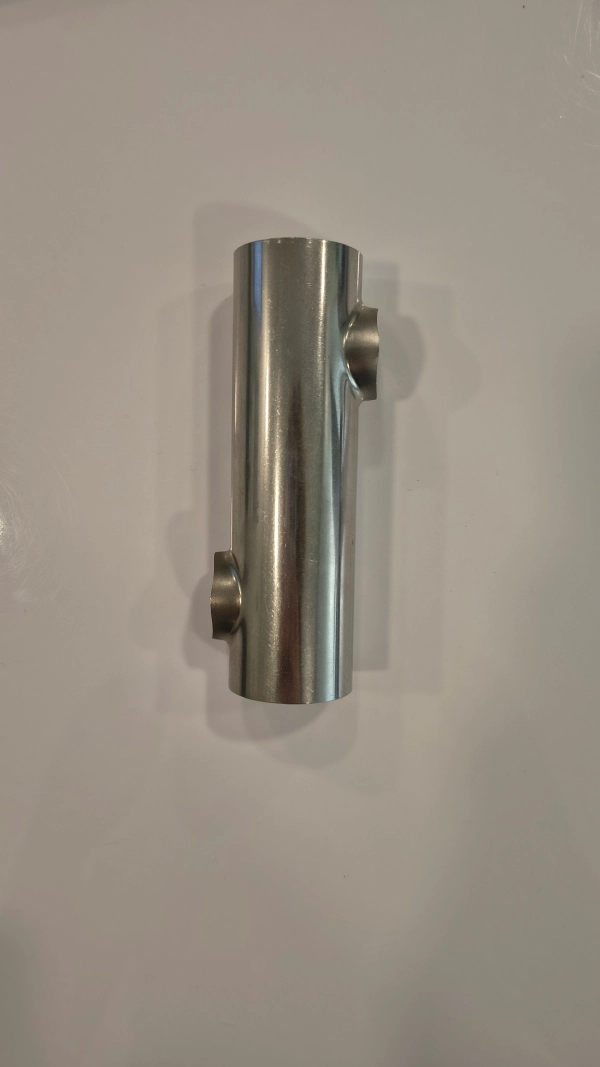
Metal tube extrusion significantly reduces the main welding-related defects:
- weld bead inconsistency;
- distortion during welding;
- weld pool instability;
- need for rework.
This results in:
- higher component reliability;
- reduced scrap;
- improved productivity.
Since orbital welding is highly repeatable, it amplifies the benefits of proper preparation: if the first joint is perfect, all subsequent ones will be as well.
Industrial applications: where extrusion and orbital welding make the difference
The integration of metal tube extrusion and orbital tube welding is particularly relevant in high-criticality sectors:
- pharmaceutical and food processing plants;
- high-purity fluid systems;
- heat exchangers;
- energy and nuclear plants.
In these fields, weld quality is not just a technical requirement, but a regulatory and safety necessity.
The ability to achieve clean, consistent, and repeatable joints makes this technological combination essential.
The Ricos advantage: integration between process and result
At Ricos, metal tube extrusion is not treated as a simple production step, but as an integral part of the engineering process.
The real competitive advantage comes from integrating:
- industrial design;
- tube processing;
- welding preparation;
- quality control.
This approach ensures:
- geometries optimized for orbital welding;
- reduced production criticalities;
- continuity between design and manufacturing.
It’s not just about producing a tube, it’s about engineering a component ready to perform.
Weld quality starts before welding
Metal tube extrusion demonstrates a key principle in industrial manufacturing: final quality is the result of all previous steps.
A perfect orbital weld does not depend solely on the welding technology, but on the quality of the starting component.
Investing in tube preparation means:
- reducing errors;
- improving performance;
- increasing reliability.
This integration between process and result is where true industrial advantage is built.
If you work with tubular components and need reliable, repeatable orbital welds, optimizing tube geometry is a fundamental step.
Discover our welding services and connect with our team to develop solutions designed to ensure quality, precision, and production continuity.