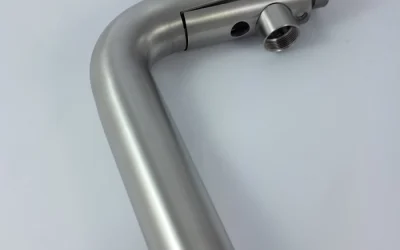
Let’s begin with a question: why is high pressure hydrogen storage one of the key pillars of future mobility?
The evolution of modern energy systems makes hydrogen storage a central topic for fuel-cell mobility, especially when dealing with tanks operating at 350–700 bar and circuits reaching 500 bar.
The first challenge is ensuring safe, compliant, and durable high pressure hydrogen storage while preventing issues such as permeation and embrittlement. Many companies are accelerating the development of vehicles and infrastructures designed to contain hydrogen, but without dedicated components, the risk of leakage or structural failure increases significantly.
This is why custom collectors become essential: they reduce connection points, optimize gas paths, and maintain stable pressure throughout the system. For developers of fuel-cell technologies, this means choosing an engineering solution that integrates design, materials, and testing to guarantee operational continuity and faster certifications.
In this article, we dive into the details.
The Limits of Standard Components in High Pressure Hydrogen Storage
Many industrial components are not designed to withstand the severe conditions required for high pressure hydrogen storage, especially at elevated pressures.
Hydrogen is an extremely small molecule capable of penetrating micro-cracks and altering improperly selected metallic structures.
For this reason, using commercial fittings or multi-point circuits becomes inadequate for hydrogen storage: they increase potential leakage paths and the likelihood of system failure. Non-compliance with hydrogen-specific standards can even compromise entire projects, particularly in mobile applications or refueling stations.
Professionals in the hydrogen sector know that the challenge lies not only in sealing capability but also in durability. Standard systems cannot endure repeated pressure cycles and thermal stress, making custom solutions essential.
So how do we move forward?
Why Custom Collectors Are the Ideal Solution for High Pressure Hydrogen Storage
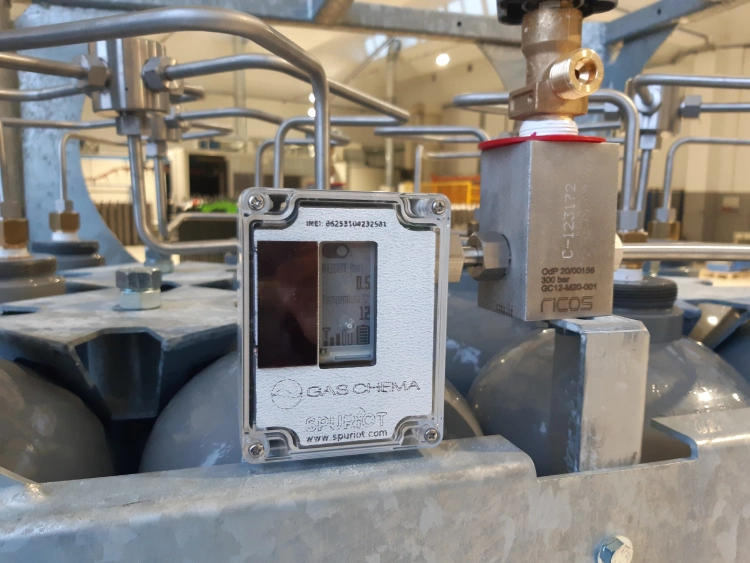
Among the most effective solutions for high pressure hydrogen storage, custom collectors stand out for their ability to integrate specialized design, welding, and resistance to extreme pressure cycles.
In hydrogen storage systems, these components drastically reduce mechanical joints, one of the main risk factors in high-pressure circuits.
Thanks to tailored engineering, the gas path is optimized to prevent turbulence and dead zones that could compromise system integrity.
Material and geometry selection is based on simulations and FEM analysis, ensuring long-term structural stability.
For companies developing fuel-cell technologies, relying on a customized collector means achieving a more stable, certifiable, compact, and safer system.
Integrity and Strength Under Extreme Conditions
Managing an installation dedicated to high pressure hydrogen storage at 500 bar requires selecting materials and processes capable of resisting hydrogen embrittlement and pressure cycling.
This phenomenon modifies the microstructure of metals, making them less tough. This is why specific alloys, such as austenitic stainless steels or certified materials, are preferred for hydrogen storage systems.
Every decision involves not only mechanical strength but also internal surface quality, a critical factor in minimizing permeation and long-term leakage.
Design also affects durability: smooth curvature, absence of accumulation points, and uniform section transitions help distribute stress effectively.
Only an engineering-driven approach can produce a collector capable of safely operating under such extreme conditions.
Fewer Joints, More Safety in High Pressure Hydrogen Storage
In circuits designed for high pressure hydrogen storage, reducing leakage points is essential, making custom collectors the preferred choice.
Optimized connection architecture removes unnecessary fittings, improves system compactness, and increases reliability in mobile applications.
In hydrogen storage systems, custom design also enables the integration of valves, sensors, and monitoring points into a single body, improving flow management and simplifying inspection procedures.
Beyond technical performance, this approach streamlines certification: a tailor-made collector allows for a complete technical dossier, essential for safety checks and high-pressure approvals. The result is a more efficient, lightweight, and robust solution compared to traditional assemblies.
TIG and Orbital Welding: The Safety Core of High Pressure Hydrogen Storage
The quality of welded joints directly affects high pressure hydrogen storage, which is why TIG welding, often in orbital configuration, is considered the most reliable technique for high-pressure collectors.
For hydrogen storage applications, this process ensures metallurgical continuity, flawless internal finishing, and minimal operator variability.
Procedures involve controlled purging, inert gases, and constant parametric cycles to prevent inclusions or defects that could become potential leak paths.
Non-destructive testing methods such as PT, RX, and UT are added to the process, alongside mandatory WPS and PQR documentation required for TPED certification.
Our company uses validated orbital welding systems and rigorous processes, ensuring joints suitable for extreme pressures and compliant with European regulations.
Hydrostatic Testing and TPED Certification: A Mandatory Standard
Compliance for high pressure hydrogen storage systems requires hydraulic tests that verify weld strength and collector sealing.
After welding, components undergo hydrostatic tests and leak detection procedures to certify suitability for high-pressure hydrogen storage.
This step is essential to obtain TPED certification, which is mandatory for transportable equipment.
Internal management of design, production, and testing allows us to reduce lead times and costs, offering a custom-made solution that is far more cost-effective than assembling standard fittings.
With complete control over the supply chain, the company guarantees a reliable, certifiable collector ready for integration into vehicles, fuel-cell systems, or refueling trailers.
Relying on the Right Collectors Makes High Pressure Hydrogen Storage Safe
Companies working in the hydrogen sector know how challenging it is to ensure compliant, safe, and long-lasting high pressure hydrogen storage.
Only a partner with advanced design expertise, specialized welding capabilities, and regulatory knowledge can provide truly reliable custom collectors.
If your company is developing fuel-cell mobility systems or high-pressure infrastructures, rely on those who can guarantee a fully integrated internal supply chain.
Contact us to design your TPED-compliant collector.