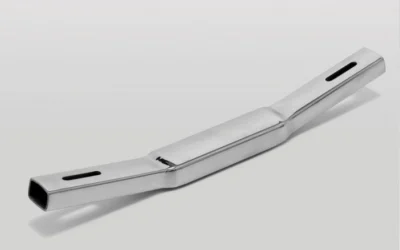
Pipe profiling is a key process in the metalworking industry that makes it possible to produce pipes with dedicated diameters, customised profiles and controlled surface finishes, overcoming the limitations of standard mill-produced pipes. Thanks to this process, profiled pipes can be manufactured with much tighter dimensional and geometric tolerances, ensuring precision, repeatability and high quality on both internal and external surfaces.
In industrial environments, pipe profiling is chosen when reliable components, high mechanical performance and a high level of integration within production processes are required. This technology helps reduce secondary machining operations, speeds up assembly phases and delivers ready-to-use pipes, optimising overall lead times and costs.
In this article, we analyse how pipe profiling works, the advantages of profiled pipes, the main industrial applications and the criteria for choosing a reliable supplier.
What pipe profiling is and how it is performed
Pipe profiling is a controlled deformation process that allows the diameter, shape and tolerances of a pipe to be modified starting from a standard semi-finished product. Through the use of calibrated roller systems and dedicated profiling machines, it is possible to obtain profiled pipes with low-roughness internal and external surfaces, significantly improving quality compared to standard mill pipes.
During processing, the pipe passes through a series of rollers that progressively shape its geometry without compromising the material’s mechanical strength. This approach makes it possible to achieve dedicated diameters, consistent profiles and controlled tolerances, even for technically complex applications.
Pipe profiling is particularly suitable for industrial sectors where precision, dimensional reliability and surface quality are essential requirements.
How the pipe profiling process works
The pipe profiling process is based on feeding the pipe through profiling lines equipped with precision rollers and guides that gradually deform the material until the desired final profile is achieved. The resulting profiled pipes feature dedicated diameters and uniform internal and external surfaces, with tolerances significantly tighter than standard mill specifications.
At Ricos, every phase of the process is monitored using measuring instruments and dimensional inspection systems, ensuring repeatability, stability and uniformity even for medium-to-high production volumes. The ability to customise the diameter according to the application allows the pipe to be tailored to the actual functional requirements of the component.
Integration of the process into automated lines reduces production times, minimises scrap and delivers pipes ready for subsequent assembly or welding operations.
Advantages of pipe profiling
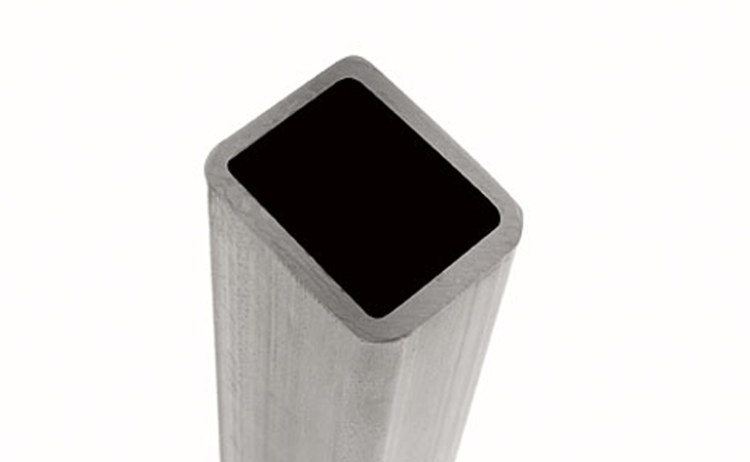
The advantages of pipe profiling mainly concern dimensional accuracy, surface quality and the reliability of the finished component. Profiled pipes feature tight tolerances and low-roughness surfaces, which are essential characteristics for high-precision industrial applications.
This process helps reduce or eliminate secondary finishing operations, improving production efficiency and speeding up assembly times. The ability to achieve dedicated diameters also allows mechanical fits and functional performance to be optimised.
From a production standpoint, pipe profiling contributes to waste reduction, improved overall quality and greater product consistency, making it a strategic solution for sectors such as automotive, plant engineering and industrial machinery.
Industrial applications of profiled pipes
Pipe profiling is used across numerous industrial sectors where precision and reliability are critical. Profiled pipes are commonly employed in hydraulic and oleodynamic systems, fluid transport applications, industrial machinery structures and automotive components.
In these applications, the ability to achieve dedicated diameters and smooth surfaces improves fluid dynamics, reduces friction and increases component durability. Pipe profiling also enables compliance with strict technical specifications, enhancing safety and operational efficiency.
Thanks to profile customisation, companies can integrate pipes directly into their production systems, reducing adaptation time and corrective interventions.
Ricos: your reliable partner for pipe profiling
Pipe profiling requires advanced technical expertise, dedicated equipment and a design-oriented approach focused on identifying the best solution for each application. Ricos stands out as a reliable partner thanks to its integrated management of the entire process, from the technical analysis of customer requirements to the production of profiled pipes with dedicated diameters, controlled tolerances and low-roughness internal and external surface finishes.
Thanks to high-performance equipment and continuous quality control, our company guarantees repeatability and production consistency even for medium-to-high batch sizes. Technical support during the design phase allows the feasibility of pipe profiling to be assessed from the outset, optimising geometries, materials and costs.
The integration of complementary processes such as cutting, welding and forming reduces coordination time and simplifies production management. Ricos does not simply execute operations, but supports customers in choosing the most efficient and qualitatively suitable solution for the final application.
Conclusion
Pipe profiling makes it possible to produce profiled pipes with dedicated diameters, smooth surfaces and controlled tolerances, improving performance, reliability and integration within industrial processes. It is a strategic solution for metalworking companies that focus on quality, precision and production optimisation.
Discover the Ricos pipe forming service and how an integrated technical approach can support your production needs.