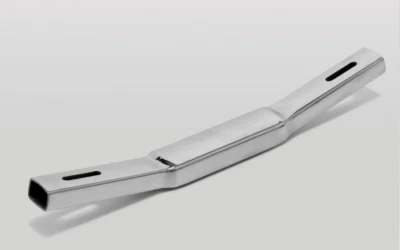
AI CNC programming can help reduce the time required to transform a new project into a stable production process. In more complex processes, the challenge is not simply manufacturing the component, but identifying the correct combination of parameters, verifying the result, and making the necessary adjustments.
At Ricos, we have applied artificial intelligence to the hydroforming process, starting from an important advantage: we have a machine developed entirely to our specifications, which gives us direct control over the processing variables.
The goal is to use data and experience to speed up the setup of new components and improve time to market.
Why does setup affect hydroforming time to market?
With AI CNC programming, the key is not simply automating an operation, but understanding how different variables influence the final result.
During hydroforming, a metal tube is deformed by the pressure exerted by a fluid inside a die. Before achieving repeatable production, however, it is necessary to define a combination of parameters that is consistent with the material and the required geometry.
Pressure, phase duration, deformation speed, and machine movements must work together. Changing a single variable can alter the way the material is distributed, affecting the shape, wall thickness, and quality of the component.
The setup phase may therefore require several tests, especially when working with geometries that have never been produced before.
The advantage of a machine developed to our specifications
The application of AI CNC programming was made possible by a hydroforming machine designed around the production requirements of Ricos.
This means that we are not simply using a standard system: we have extensive control over the parameters that determine the process. We can adjust the settings, record test data, and link each configuration to the result obtained on the component.
To apply artificial intelligence effectively, it is essential to know which variables have been used and what effects they have produced.
The value of a custom-developed machine therefore goes beyond its mechanical characteristics. It also lies in the ability to collect structured information and use it to progressively improve process setup.
How were the parameters defined before AI?
Before introducing AI CNC programming, parameter definition relied primarily on the technician’s experience, analysis of the drawing, and a series of progressive tests.
Material, diameter, wall thickness, and final geometry make it possible to identify an initial configuration. The resulting sample must then be inspected to determine whether the tube has achieved the required shape and whether issues such as wrinkles, thinning, or breakage have occurred.
Based on the result, the technician adjusts one or more parameters and performs another test.
This method remains essential because it allows the actual behaviour of the material to be observed. Artificial intelligence does not replace this expertise, but makes it possible to organise and reuse the information gathered from previous processes more effectively.
AI and hydroforming: which data are correlated?
In the relationship between AI and hydroforming, the system must connect the initial characteristics of the project, the parameters used, and the result obtained.
Input data may include the material, tube diameter, wall thickness, and the geometry to be achieved. These are combined with the variables managed by the machine, such as pressure, speed, duration, and the sequence of the different process stages.
The results of the tests make it possible to assess whether the component has achieved the required shape and whether the deformation occurred without significant issues.
Artificial intelligence can analyse these relationships to identify configurations that have already proved effective under similar conditions and provide a starting point closer to the desired result.
However, the quality of the support depends on the consistency and accuracy of the available data.
How do we use artificial intelligence to set up the process?
AI CNC programming is applied during the setup phase to reduce the number of attempts required to identify a promising configuration.
The process begins with data collected from previous tests and manufacturing operations. The system analyses the relationships between tube characteristics, the parameters used, and the results obtained, identifying possible similarities with the new component to be produced.
Based on this information, it can support the definition of the initial settings, narrowing down the number of combinations that need to be evaluated.
The proposed configuration must still be reviewed by the technician and tested by manufacturing a sample. The new result is then inspected and can contribute to expanding the information available for future projects.
AI does not automatically identify a perfect solution, but it makes the search for suitable parameters more targeted.
What are the advantages of using artificial intelligence in CNC programming?
The use of AI CNC programming can make programming more efficient by allowing accumulated experience to be used in a structured way.
In the case of hydroforming, the main advantages include:
- a starting point closer to the correct configuration;
- fewer unpromising tests;
- better use of historical data;
- greater consistency between similar projects;
- transfer of knowledge gained during production;
- practical support for the technician’s decisions;
- potentially faster sampling;
- less time required to reach industrialisation.
The actual benefits depend on the complexity of the component, the material, and the availability of data from comparable manufacturing processes.
Does reducing time to market mean eliminating testing?
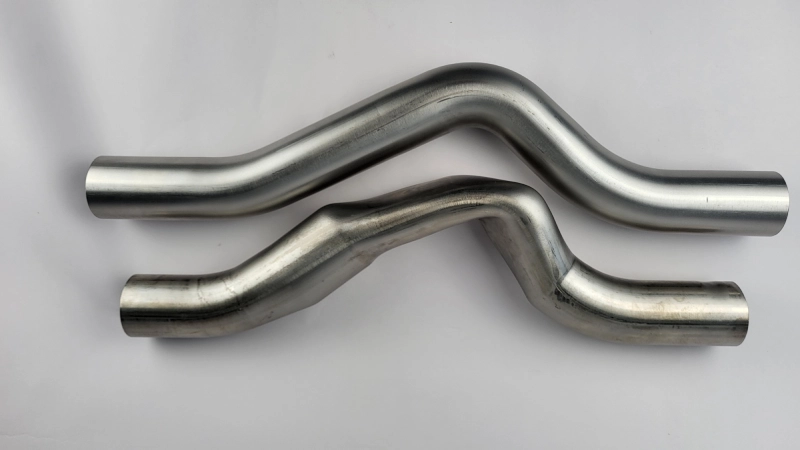
The application of AI CNC programming does not eliminate the need to produce samples, perform inspections, and validate the process.
The component must still be manufactured and checked to determine whether it meets the required dimensions, geometry, and project specifications. Artificial intelligence can, however, help avoid unsuitable configurations and focus testing on combinations that have a greater likelihood of success.
The distinction is therefore important: validation is not eliminated, but the number of iterations required to achieve it can potentially be reduced.
This can help limit time, material consumption, and adjustments during the initial phase without giving up the inspections required to ensure the quality of the final result.
The technician remains at the centre of the decision-making process
Even with the introduction of AI CNC programming, the technician’s experience remains essential. The system can analyse data and identify relationships, but every recommendation must be interpreted by considering the material, geometry, tooling, tolerances, and intended use of the component.
Conditions that have never been encountered before may also arise and may therefore not yet be represented in the available data. In these situations, the ability to understand material behaviour and identify process criticalities remains decisive.
Artificial intelligence therefore becomes a decision-support tool and a structured memory of production experience. It does not replace expertise, but helps preserve, compare, and make it more easily accessible for future projects.
From the first sample to a repeatable process
The integration of AI and hydroforming should not simply accelerate the production of the first sample. The result must be transformed into a stable and repeatable process.
Once an initial configuration has been identified, the component is inspected to verify its geometry, wall characteristics, any defects, and compatibility with subsequent manufacturing operations.
It may also be necessary to compare multiple components to determine whether the parameters ensure consistent quality throughout production.
Industrialisation is achieved when settings, operating sequences, and inspections are sufficiently stable to make the result repeatable. AI therefore contributes not only to initial speed, but also to building knowledge that can be reused over time.
What benefits can the customer gain?
The application of AI CNC programming can help accelerate the transition from drawing to an industrialised component.
For the customer, this means being able to evaluate new geometries more quickly, reduce unnecessary testing, and achieve greater predictability during the development phase.
The use of data can also make it easier to compare similar projects and retrieve previously tested settings more quickly.
The benefit is not the same for every application. A completely new component manufactured from a material that has never been analysed may require a more extensive development phase. When consistent and comparable data are available, however, the process can benefit more significantly from the support of artificial intelligence.
The limitations of AI applied to manufacturing processes
AI CNC programming cannot provide reliable recommendations without sufficient and properly organised information.
Incomplete data, inconsistently classified results, or unrecorded variables can limit the quality of the analysis. The same applies when a new component has characteristics that differ significantly from those of previously analysed projects.
For this reason, applying artificial intelligence requires a rigorous method for collecting, checking, and interpreting data.
Any result suggested by the system must also always be verified on the actual component. AI improves the ability to make informed decisions, but it does not eliminate the need to compare predictions with the physical behaviour of the material and actual production conditions.
AI CNC programming: from innovation to industrial results
For Ricos, AI CNC programming is a tool applied to a specific need: reducing the time required to set up and industrialise a new hydroforming process.
Having a machine developed to our specifications allows us to directly control the parameters, collect data, and connect the settings to the results obtained.
The real value comes from integrating technology, hydroforming expertise, the technician’s experience, and verification on the actual component.
Do you have a tubular component with a complex geometry or a new project to develop?
Discover our tube hydroforming service and contact us to analyse the material, geometry, and production process together.