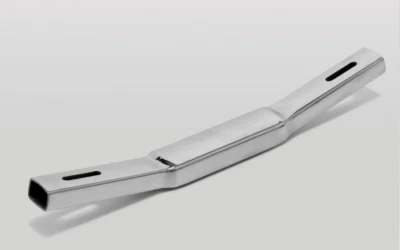
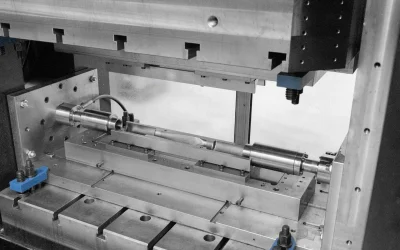
In the high pressure sector, every single joint is a critical point. The choice between standard mechanical connection systems and certified welded solutions directly impacts cost, safety, and the flexibility of your project. For years, Swagelok fittings have been the gold standard for sealing and reliability in systems operating under high stress.
However, in some applications, an alternative can be considered: custom-made welded high-pressure tubing. This solution can offer greater design freedom, reduce the number of mechanical connections, and allow for more integrated component management, provided that materials, welding process, and inspection procedures are defined according to the actual operating conditions.
The dominance of Swagelok fittings: standard and sealing
Swagelok fittings (or double-ferrule fittings) have become synonymous with high pressure connections due to two key factors:
- Standard Reliability: they are industrial components designed and tested to provide reliable mechanical connections without requiring welding. However, performance, allowable pressure, and compatibility depend on the specific product family, material, tubing used, and operating conditions.
- Ease of Assembly: They allow for relatively quick assembly and require only standard tools and minimal tube preparation.
Despite these advantages, relying solely on Swagelok fittings presents significant drawbacks, especially when dealing with complex junctions or large-scale production:
- High Unit Cost: Their technology and brand name carry a substantial unit price tag.
- Lack of Flexibility: You are limited to the standard geometries and materials available in the catalog. Any minor design deviation requires expensive special fittings or additional adapters.
- Multiple Potential Leak Points: each fitting introduces an interface that must be correctly sized, installed, inspected, and, when necessary, maintained. Reducing the number of connections can therefore simplify the circuit architecture and decrease the number of points that need to be managed, without implying that a correctly selected and installed fitting is automatically a weak point.
The alternative solution: certified high pressure welding


Faced with the cost and flexibility limitations of mechanical fittings, the most advantageous and precise alternative is the fabrication of high pressure piping using certified high pressure welding. This option not only ensures the required sealing but provides the design freedom necessary for modern engineering projects.
“Ad Hoc” manufacturing and cost optimization
The economic advantage of a custom solution does not simply come from replacing a fitting with a weld, but from the possibility of optimizing the entire system. When geometry and production volumes justify it, designing the tube and joints as a single integrated solution can reduce the number of components, assembly operations, and supplier handovers:
- Reduction in components: when the project allows it, the number of Swagelok fittings and required adapters can be reduced, assessing the total cost of the solution rather than only the unit price of the fitting.
- Material Optimization: The pipe is fabricated with maximum precision, reducing waste.
- Supply Chain Efficiency: Having a single partner that guarantees the welding, the model, and the solution eliminates logistical, management, and coordination costs between multiple suppliers.
The right cost is the cost of the entire system
When comparing Swagelok fittings and welding, the price of the individual component represents only one part of the overall project. Assembly time, number of connections, tooling, welding procedures, inspections, possible leak or pressure tests, maintenance, and the ability to disassemble the circuit in the future must also be considered.
A welded solution can become particularly attractive when it simplifies a complex geometry or integrates several functions into a single component. Conversely, when frequent maintenance, replacement, or reconfiguration is required, a mechanical connection may offer important operational advantages.
The most cost-effective choice is therefore the one that reduces the total cost over the system’s life cycle while maintaining the required performance.
Sealing performance and integrity of the welded solution
Unlike Swagelok fittings, which create a mechanical connection, welding produces a permanent metallurgical joint between the components. This can be an advantage when the project requires a stable, compact geometry that is not intended to be frequently disassembled.
The quality of the joint, however, depends on the material, geometry, process used, welding parameters, and the inspections specified for the project. Even a laser weld must therefore be developed and verified according to the actual application.
When required, the component can be subjected to dimensional inspections, weld examinations, and pressure or leak tests defined by the applicable specifications. A single test alone does not determine the regulatory compliance of the entire system: design, manufacturing, assembly, and verification must be considered together.
The value of a custom solution
The main advantage is design flexibility. Custom design reduces the constraints associated with catalogue-only geometries and allows the tubing to be developed according to the available space, connection requirements, and expected performance.
It is therefore possible to create manifolds, complex tubes, and joints with specific geometries that, if produced exclusively with compression fittings, could require a greater number of components, adapters, and connection points.
In addition, welded tubing is manufactured ad hoc for the system, potentially enabling faster installation, reduced overall dimensions, and a cleaner, more professional layout.
When Swagelok fittings remain the most suitable solution
Swagelok fittings retain important advantages when the system must be assembled quickly, modified, inspected, or disassembled without permanently altering the tubing.
They can be particularly useful in instrumentation, configurable circuits, and applications where accessibility to the connection is a design requirement. Product families are also available for very high-pressure conditions and, in specific cases, for hydrogen applications.
The choice must, however, be based on the actual component required, verifying pressure and temperature ratings, material, tube diameter, fluid, and applicable certifications. “Swagelok” does not identify a single fitting suitable for every operating condition.
When should welding be chosen instead of Swagelok fittings?
The choice between Swagelok fittings and a welded solution depends on how the system is expected to operate over time. When ease of installation, disassembly, and reconfiguration are required, a mechanical connection may be the most effective solution.
When, on the other hand, the project requires custom geometry, fewer connections, reduced overall dimensions, or the integration of multiple manufacturing operations into a single component, a custom-made welded tube can be worth considering.
There is therefore no single technology that is always superior. Pressure, material, fluid, geometry, production volumes, maintenance requirements, inspections, and regulatory requirements must all be evaluated together.
At Ricos, we can start from the component and its operating conditions to assess the processes, welding methods, tooling, and inspections required to manufacture the most suitable solution.
Do you need to develop a component or tubing system for a high-pressure application?
Contact us to evaluate the most suitable solution for your project.