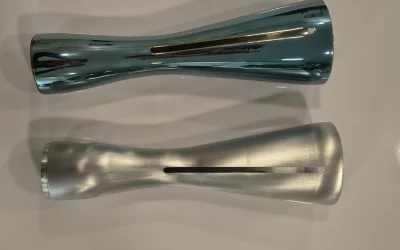
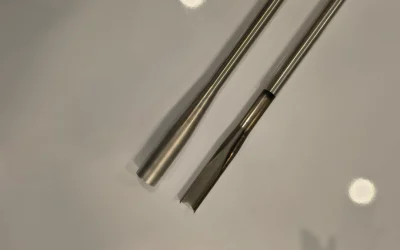
Aluminum deformation plays a strategic role today in sectors such as automotive, aerospace, e-mobility, furniture, and industrial design, where reduced weight and mechanical strength are essential requirements.
Aluminum offers an excellent strength-to-weight ratio, strong corrosion resistance, and high workability, provided that alloys and material conditions are correctly understood. Modern alloys also make it possible to work with reduced thicknesses without sacrificing structural performance, enabling the production of complex, optimized, and highly efficient components.
However, obtaining precise and complex shapes is never simple: aluminum processing, especially when involving thin gauges, requires calibrated techniques and strict control to avoid breaks, cracks, or unwanted deformation.
In this article, we examine the main deformation techniques, showing how experience and material knowledge can transform even delicate geometries into reliable components.
Alloys and Tempers: The Foundation of Effective Aluminum Deformation
Understanding material tempers and alloy families is the first step toward reliable and defect-free aluminum processing. Each alloy, from the 1000 (pure aluminum) to the 3000, 5000, 6000, and 7000 series, offers specific characteristics in terms of strength, ductility, and mechanical behavior. The material’s temper (annealed, work-hardened, solution-treated, or precipitation-hardened) also deeply influences aluminum deformation: an annealed (O) material is softer and easier to shape, while a pre-tempered alloy (T4–T6) may resist bending and generate cracks if not processed with the correct parameters.
Selecting the right alloy/temper combination determines structural stability and achievable tolerances. Mastery of these aspects allows the identification of the most suitable process, prevents defects, reduces waste, and optimizes performance, especially when dealing with very thin materials that increase aluminum sensitivity to mechanical stress.
Applicable Techniques for Precise Aluminum Deformation

The rising demand for lightweight and complex geometries makes aluminum processing a delicate stage, especially when the thickness drops to 1 mm or less. To achieve precise results, it is essential to accurately control the elastoplastic behavior of the material, anticipate springback, and calibrate the applied force.
Techniques such as controlled bending of tubes and profiles minimize ovalization and help preserve wall integrity, while advanced methods such as hydroforming allow the creation of highly complex hollow shapes that are difficult to replicate using traditional methods.
Hydroforming, based on the use of pressurized fluids, ensures uniform stress distribution and reduces the risk of collapse or crushing. Our company selects the most suitable technique based on the alloy, temper, and thickness, guaranteeing dimensional consistency, aesthetic quality, and repeatability in every production batch.
Integrated Processes: Completing the Aluminum Deformation Workflow
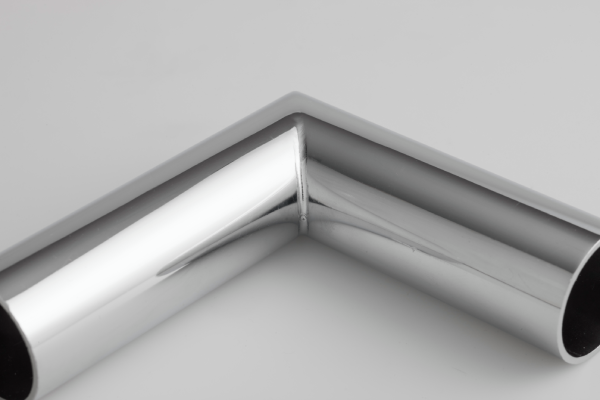
A component is rarely complete after deformation alone: to achieve a truly finished result, additional steps are required to ensure precision, stability, and functionality. For this reason, aluminum processing includes additional operations such as 2D and 3D laser cutting, both before and after deformation, to maintain tight tolerances even on minimal thicknesses without inducing thermal distortion.
TIG, MIG, or laser welding, performed by highly trained operators, allows pre-formed parts to be joined while preserving the purity of the weld pool and preventing porosity. Finally, CNC machining enables the creation of housings, threads, or fixing points with extreme precision, even after the deformation phase.
Competitive Advantage: Why Choosing a Supplier That Integrates All Steps Matters
Fully internal management of aluminum processing, from alloy selection to the delivery of the finished component, offers a significant competitive advantage. An integrated production cycle reduces lead times and costs, ensures consistent quality, and allows quick response to design changes.
For thin components and complex geometries, avoiding external processing eliminates the risk of dimensional inconsistencies or damage during transport. A single supplier responsible for every phase also guarantees full traceability, an essential requirement in highly regulated sectors such as automotive, aerospace, rail, and medical.
Rapid prototyping further allows early testing of deformation behavior, optimizing geometries, thicknesses, and processes before entering mass production. Integration ensures a continuous workflow, reducing errors and maximizing component reliability.
Aluminum Deformation Is a Skill, Not Just a Process
In advanced projects, successful aluminum processing depends on the combination of materials science and mastery of high-level production techniques. Knowing alloys, tempers, and limits enables safe deformation even on very thin gauges, preventing defects and maximizing final quality.
A complete aluminum workflow, integrating deformation, laser cutting, welding, and CNC machining, makes it possible to obtain lightweight, stable components that meet the demands of the most complex applications.
The ability to turn difficult geometries into finished, ready-to-use parts is a decisive asset for designers and companies seeking reliable technical solutions.
If you have an aluminum project to develop, a complex geometry to produce, or an existing component to optimize, you can send us your technical drawings: our company is ready to transform your most demanding ideas into high-precision industrial reality.