
In our daily work, we often collaborate with companies looking for more efficient ways to produce high-quality components while keeping both timelines and costs under control. In these situations, custom engineering solutions prove to be one of the smartest choices available.
Designing custom solutions means starting from the actual needs of the customer. We don’t just adapt standard designs — we listen, analyze the context, and evaluate all technical, mechanical, and economic constraints. This approach enables us to develop a part that not only functions properly but also integrates seamlessly into the system where it will be used. The result? Fewer errors, fewer modifications, and a smoother production flow.
Targeted design for real cost savings
Over time, we’ve seen how custom engineering solutions can become a powerful tool for cutting costs, not just for the component itself, but throughout the entire production chain. Shorter assembly times, guaranteed compatibility with existing systems, and carefully selected materials based on real use cases all contribute to this efficiency.
Standard parts often require adjustments or modifications that add time and increase the margin for error. By contrast, with a custom approach, we can anticipate issues right from the design phase. We know which operations will be involved, which tools will be used, and which tolerances are critical. This enables us to create components that are easier to machine, assemble, and maintain.
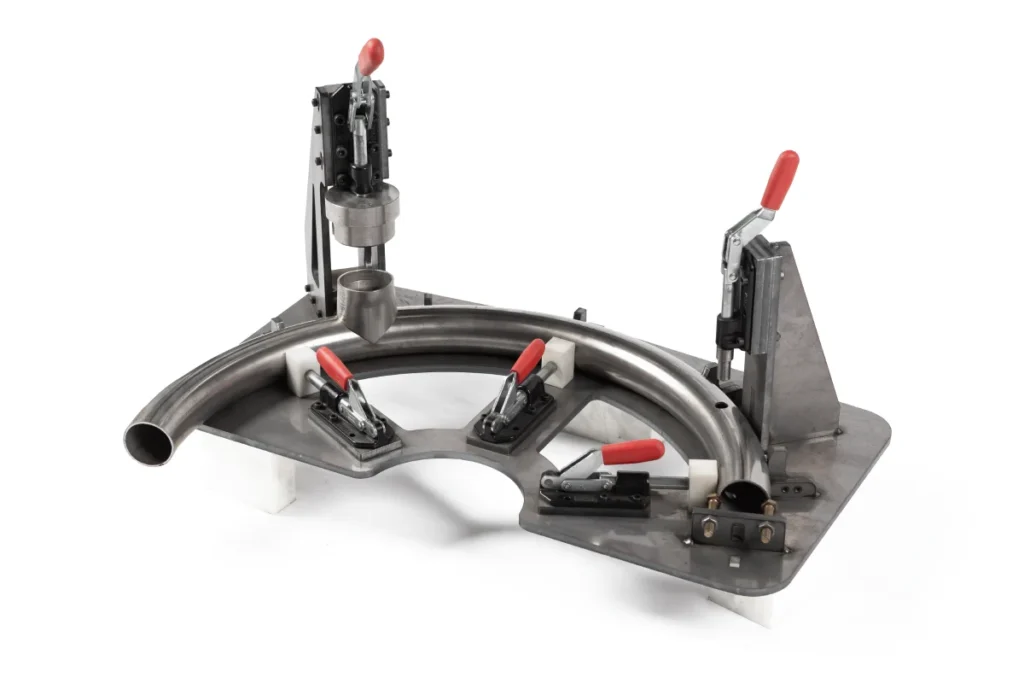

We also rely on our in-house milling, turning, and laser cutting departments — key resources for setting up efficient and productive tooling systems.
Prototyping as a core step, not an extra one
One of the key moments in our workflow is prototyping. This is where the project takes physical shape, and we get to test everything we’ve designed, discussed, and approved — hands-on.
Having a first prototype in hand allows us to verify ergonomics, assembly tolerances, and how the material reacts to planned operations. If something doesn’t convince us, we can make targeted adjustments before starting full production, avoiding waste and costly rework.
From idea to finished component: a continuous workflow
We don’t just take care of the initial design phase. Our approach involves managing the entire process. We guide our clients from the first idea through to final production — selecting materials, verifying drawings, executing machining operations, and performing quality control.
Every phase flows into the next. For instance, when we select a metal, we don’t only consider its mechanical properties, but also its compatibility with the operations it will undergo: bending, welding, cutting, and hydroforming. This prevents technical issues and ensures maximum performance.
Designing a part without considering how it will be made is ineffective. That’s why each of our drawings is created with production in mind: dimensions that match our equipment, geometries optimized to reduce machine time, and technical choices that simplify assembly and maintenance.
Fewer errors, more control, lower costs
Every error we can prevent leads to concrete savings for our clients. Whether it’s assembly issues, production waste, or defects caused by imprecise designs, we know these situations well, and we address them through detailed custom engineering solutions from the start.
A part designed this way arrives ready to use, with no need for adaptation. This drastically reduces downtime and hidden costs — the ones often not included in quotes but that weigh heavily on the final budget.
And when a component is designed for its specific context, it lasts longer. It works better, resists more, and requires less maintenance. This extends the product lifecycle, delivering long-term value.
When customization is the only sensible choice

There are situations where custom engineering isn’t just the best option — it’s the only one that makes sense. For example, when a part needs to integrate into an existing system, perhaps with outdated or unusual geometries. Or in prototype development for new products, where innovative shapes, functions, or materials are being tested.
Even in small batch productions, going custom allows us to optimize every phase without relying on expensive molds or rigid workflows. In these cases, flexibility is everything, and we ensure it with a precise and proven method.
Smart design means better manufacturing
We’ve chosen to invest deeply in custom engineering solutions because we’ve seen the difference they make — not only technically, but also in the way we collaborate. When we design together with the client, every detail becomes clearer, and every decision more informed.
For us, designing well is the first step toward working better. It means fewer errors, better use of time, and improved performance. But above all, it creates a trust-based partnership grounded in real, measurable, and visible results.
Want to know how we work? Discover our custom engineering service here

