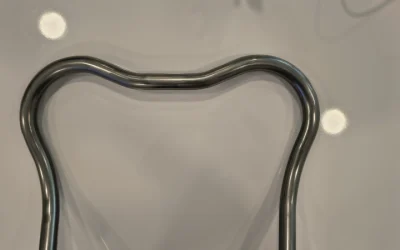
Laser cutting on aluminium is a strategic technology for companies that require precise, lightweight components with complex geometries, especially when delivery times and edge quality are critical factors. Thanks to the use of next-generation fiber laser systems, aluminium and its alloys can be processed with high process stability, repeatability and excellent cut edge quality.
This type of machining is particularly suitable for sectors such as metalworking, plant engineering, automotive and advanced metal fabrication, where reducing secondary operations and scrap is essential.
Understanding how the process works and what can realistically be achieved allows companies to make informed technical decisions focused on production efficiency and final product quality.
What laser cutting on aluminium is and why it is used
Laser cutting on aluminium is a thermal separation process that uses a focused laser beam to achieve precise and controlled cuts, even on complex materials. Aluminium is lightweight, corrosion-resistant and highly reflective: a combination that requires advanced technologies to be processed reliably.
Thanks to fiber laser technology, aluminium and aluminium alloys can be cut while overcoming the limitations of traditional machining processes. This technology also enables the processing of reflective materials such as stainless steel, copper, brass and titanium.
The result is clean and repeatable laser cutting on aluminium, suitable for complex technical components, offering high design flexibility and a significant reduction in secondary finishing operations.
How the industrial laser cutting on aluminium process works
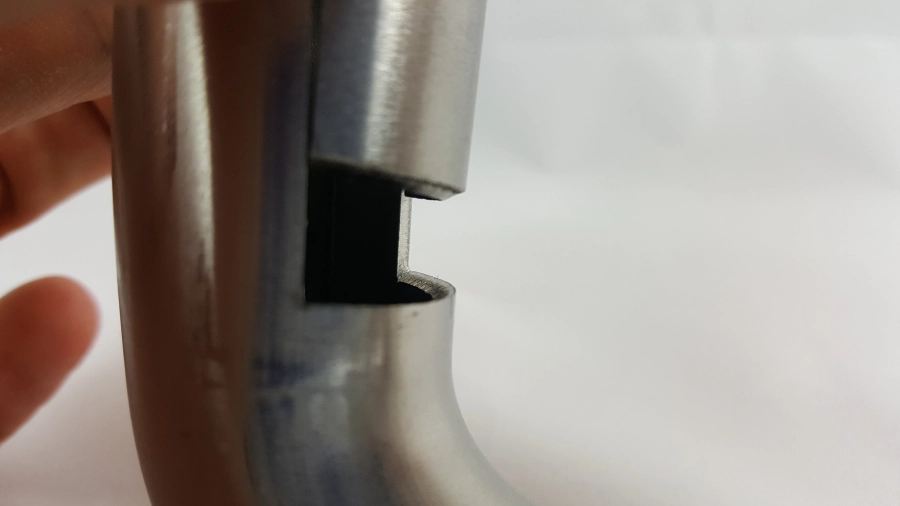
Industrial laser cutting on aluminium is based on an integrated process that combines digital design, fiber laser machines and CNC numerical control. The process starts with the definition of the CAD/CAM file, which allows the cutting program to be set according to the required geometries, thicknesses and tolerances. The laser beam is focused onto the material, locally melting the aluminium and ensuring a precise and uniform cutting line.
A key factor is the choice of assist gas: nitrogen is used to achieve clean laser cutting on aluminium, free from oxidation and ideal for components requiring high aesthetic and functional quality. Air or oxygen may be used to increase cutting speed, accepting a different edge finish. CNC control ensures production continuity, accuracy and scrap reduction.
What Ricos offers in laser cutting on aluminium
At Ricos, laser cutting on aluminium is conceived as part of a structured industrial process, not as a standalone operation. The company performs laser cutting on aluminium tubes and profiles, integrating the laser process with additional operations such as forming, bending and complete component management. This approach reduces supplier handovers and delivers a product closer to the finished part.
Ricos processes thicknesses compatible with fiber laser technology, ensuring edge quality, dimensional accuracy and repeatability even for small and medium batch sizes. Laser cutting on aluminium is always evaluated based on the final application, with the most suitable process recommended according to the customer’s technical and production requirements.
Advantages and limitations of laser cutting on aluminium
Laser cutting on aluminium offers tangible advantages in terms of precision, design flexibility and reduced processing times. The ability to produce complex geometries without mechanical contact minimizes deformation risks and improves the overall quality of the finished part. In addition, laser cutting on aluminium allows for optimized nesting, reducing material waste.
However, certain limitations must also be considered: aluminium requires high-performance machinery and carefully controlled processing parameters, especially when dealing with greater thicknesses or particularly complex geometries.
Technical limits of laser cutting on aluminium: what to evaluate before processing
Laser cutting on aluminium has some inherent technical limitations that depend on the technology and the material itself, not on the supplier. At higher thicknesses (which vary depending on the alloy and laser power), the process may become slower, with less clean edges and lower cost-effectiveness compared to alternative solutions such as waterjet cutting.
Certain aluminium alloys that are highly reflective or have high thermal conductivity require extremely precise processing parameters to avoid burrs, micro-imperfections or variations in edge quality. Similar challenges arise with extreme geometries, such as very small holes in thick sections or closely spaced details, where the laser remains precise but is not always the most stable or efficient solution.
For this reason, Ricos always evaluates the technical feasibility of laser cutting on aluminium based on thickness, geometry and alloy, proposing alternative technologies whenever laser cutting does not guarantee the best qualitative or productive outcome.
When laser cutting on aluminium is the right choice
Laser cutting on aluminium is particularly suitable when high precision, edge quality and long-term repeatability are required. It is the ideal solution for technical components, medium-to-high volume production and applications where reducing secondary operations provides a competitive advantage.
Thanks to the speed of the process and the flexibility of fiber laser technology, laser cutting on aluminium also helps shorten lead times, especially when integrated into a structured production flow. In cases involving very thick materials or specific applications, alternative technologies may be considered, but in most scenarios laser cutting remains the most efficient choice. A preliminary technical assessment is therefore essential to identify the most suitable solution.
Laser cutting on aluminium: rely on a specialized partner
Laser cutting on aluminium requires specific expertise, advanced equipment and in-depth material knowledge. Relying on a partner like Ricos means benefiting from technical support that goes beyond a single machining operation. From initial consultation to defining the most suitable process, the company supports customers in selecting the best solutions for the final application.
Laser cutting on aluminium is thus integrated into a broader production context, focused on quality, efficiency and overall lead time reduction.
Discover our laser cutting service for metal tubes.