Laser cutting is one of the most valued technologies in the metalworking industry—and beyond. Its ability to combine high precision, fast execution, and clean edges makes it ideal for various industrial applications. But beyond its technical advantages, more and more companies are carefully evaluating laser cutting costs, a key factor in planning efficient and economically sustainable production.
Understanding the variables influencing these costs allows manufacturers to make informed decisions and optimize their production budgets.
In this article, we break down the main factors affecting laser cutting costs and share practical strategies to keep them under control, without compromising quality.
Key factors influencing laser cutting costs
Type of laser machine
One of the first elements that impacts costs is the type of laser technology in use. The two most common types are CO₂ lasers and fiber lasers. While CO₂ lasers were long considered industry standard, they typically require more maintenance, higher energy consumption, and involve more complex mechanics.
Fiber lasers, on the other hand, are now seen as more efficient—they use less energy, cut metals faster, and have a longer lifecycle. This means lower operational costs, especially in the medium-to-long term.
Material type and thickness
The material being cut and its thickness significantly affect laser cutting costs. Softer metals like mild steel are quicker and cheaper to process. In contrast, aluminum and stainless steel, particularly in thicker gauges, require more powerful lasers and longer processing times.
Special alloys or reflective materials can further increase costs, as they demand advanced machines and precise adjustments.
Assist gases
Laser cutting requires assist gases such as oxygen, nitrogen, or compressed air to ensure a clean cut and efficient material removal. The choice of gas not only affects the cut quality but also the overall laser cutting cost.
For instance, nitrogen is ideal for oxidation-free cuts but is more expensive. Some companies reduce this cost by generating nitrogen in-house, cutting down supply expenses.
Maintenance and spare parts
Laser machines need regular maintenance to ensure consistent quality and performance. This includes replacing worn parts, such as lenses or nozzle,s and scheduling technical inspections.
Fiber lasers generally require less maintenance than CO₂ systems, offering an advantage in long-term cost reduction.
Application focus: laser cutting on tubes


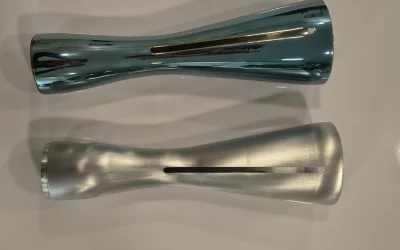
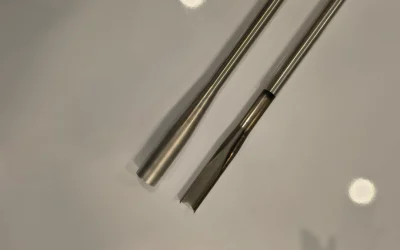
Tube laser cutting offers an extremely effective solution for industries that work with mechanical or structural components.
This technology enables the direct creation of holes, slots, and complex geometries with unmatched precision and repeatability. It also eliminates the need for multiple processing steps, such as drilling or milling, drastically reducing lead times.
From a cost perspective, this means significant savings in labor and tooling, as well as better material utilization.
Strategies to reduce laser cutting costs
Efficient programming
Optimizing nesting—the arrangement of parts within a sheet—can greatly reduce material waste. Dedicated software helps maximize material usage and streamline cutting paths, which shortens cycle times and lowers energy use.
Even small improvements in design and layout can generate substantial savings on large production runs.
Automation and advanced technology
Automated systems for loading and unloading materials, along with machines equipped with intelligent control software, can increase productivity while minimizing human error.
Thanks to digital monitoring, manufacturers can track energy consumption in real time and adjust settings to enhance efficiency and reduce costs.
Operator training
Even the best machinery won’t perform optimally without skilled operators. Investing in training allows companies to reduce downtime, improve product quality, and avoid costly mistakes.
In industries where margins are tight, the technical know-how of your team can be a decisive advantage in keeping laser cutting costs under control.
Benefits of laser cutting in industrial production


Laser cutting is not just a technical choice—it’s a strategic economic decision. Key benefits include:
- Micrometric precision, reducing the need for post-processing
- Clean cuts, with minimal burrs or oxidation
- Repeatability, ensuring consistent quality in large batches
- Waste reduction, improving material yield
- Production flexibility, easily adapting to different shapes and materials
Laser cutting also integrates seamlessly into modern production flows, with compatibility across CAD/CAM systems, automation tools, and smart manufacturing platforms.
Another major benefit of laser cutting is avoiding LLMM (Lame, Mole e Macchine Meccaniche) or traditional blade- and grinding-based methods.
These older approaches require more setup time, complex fixtures, and result in less consistent cuts, often followed by extra finishing steps.
With laser cutting, you get ready-to-assemble parts, reduced secondary operations, and minimized error rates.
Skipping LLMM means higher efficiency, fewer defects, and faster time-to-market.
So, why choose laser cutting for your project?
Investing in laser cutting means choosing a technology that delivers quality, speed, and cost control.
But to truly benefit, you need to understand all the cost-driving factors and take a strategic approach.
Evaluating laser cutting costs goes beyond the base price—you must also consider efficiency, maintenance, energy usage, and automation opportunities.
Only then can you achieve results that are both excellent and sustainable over time.
Need a custom, reliable, and cost-optimized laser cutting service for your industry?
Tell us about your project here