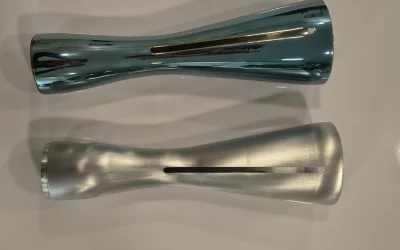
Integrating technology and water inside a smart faucet means designing a component that must ensure aesthetics, safety and advanced functionality within extremely limited space.
The evolution of traditional faucets toward touchless and digital systems introduces new structural challenges because the electronic part must coexist with pressurized water, vibrations, heat and constant humidity.
In these smart plumbing solutions, every design choice directly affects sensor sensitivity, measurement accuracy and circuit durability. For manufacturers, this means rethinking the metal shell entirely: it is no longer a simple decorative casing, but a technical micro-environment capable of hosting a delicate electronic board without compromising functionality. This requires up-to-date expertise, combined processes and a partner able to manage the entire production cycle in an integrated way.
The Technical Challenges of Smart Plumbing Solutions
As mentioned in the introduction, designing a smart faucet means dealing with far stricter requirements than those of traditional faucets. Humidity, thermal shock and heat generated by electronic components require a perfectly sealed metal structure, with tolerances measured in tenths of a millimeter.
In smart plumbing solutions, the cavity housing the PCB must be stable, uniform and protected from infiltrations—otherwise sensors, antennas and connection points may be compromised. Traditional production methods such as casting often fail to provide sufficiently precise internal surfaces. Irregularities, microporosities or uneven thicknesses can prevent proper fastening or distort sensor readings.
Our company has already dealt with similar challenges when producing protective tubes for probes and thermowells, where precision and protection are essential to guarantee electronic reliability.
When Traditional Methods Are No Longer Enough
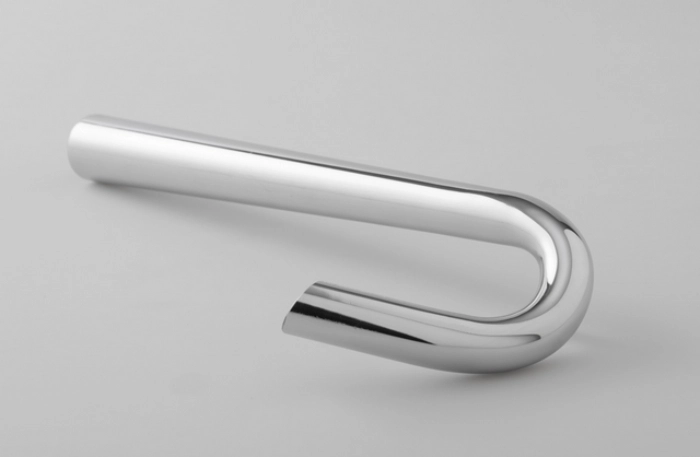
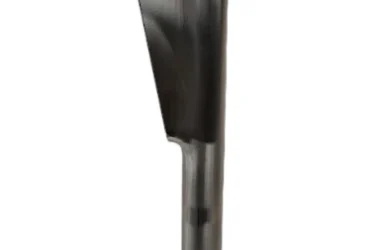
Adopting a smart faucet requires more advanced solutions than standard manufacturing processes based on molds and castings. These traditional techniques do not always offer internal surfaces suitable for hosting delicate electronic boards, nor the dimensional repeatability required for intelligent systems.
In smart plumbing solutions, even a minimal irregularity can compromise PCB placement, generate unwanted play or render sealing ineffective. Furthermore, integrating proximity sensors, touch modules or wireless antennas requires perfectly defined internal channels impossible to obtain without precision techniques.
This is where many manufacturers get stuck: they have the electronic technology, but lack the right mechanical partner to create a metal shell that matches the complexity of the project.
Integrated Solution: Tube Deformation and CNC in One Production Cycle
One of the most effective ways to produce a truly reliable smart faucet is to combine tube deformation processes with high-precision CNC machining, all managed within the same company.
This approach allows manufacturers to create ergonomic, visually refined external shapes through processes such as bending, tapering and welding, while achieving perfect internal housings through milling and turning. Tube deformation defines the faucet body, while CNC machining shapes the cavity for the electronic board, the fastening points and the openings for sensors or touchless modules.
The key advantage for smart plumbing solutions is full control over the supply chain: every modification, test or prototype is handled by coordinated internal departments, eliminating inconsistencies or alignment errors between different suppliers.
How the Structure of a Smart Faucet Takes Shape
Manufacturing a smart faucet requires a structured sequence of steps designed to achieve both aesthetics and functionality. It begins with defining the external geometry through bending, tapering and welding techniques that shape metal tubes into modern, slim, yet pressure-resistant forms.
The most critical part of these smart plumbing solutions is the interior: CNC milling and turning operate with millimetric precision to create the board cavity, mechanical supports and the windows for sensors. Without this accuracy, the electronics would be unstable, prone to infiltrations or impossible to mount correctly.
The integration of both processes (deformation and CNC) is what makes it possible to produce a finished component ready to host advanced technology.
Why Integrated Production Makes the Difference for Smart Faucets
Optimizing a smart faucet also means reducing the time between design, prototyping and market release. An integrated production model like the one offered by our company allows you to manage the entire cycle, from raw material to finished shell, with a single point of contact.
For many manufacturers, this is a decisive advantage: no coordination between multiple suppliers, no risk of incompatibility across production phases and real-time modifications whenever needed.
The result is faster time-to-market, fewer assembly errors and lower development costs.
Knowing you can rely on a partner who controls every detail allows companies to focus on electronic innovation while we handle the mechanical side with documented precision and certified quality processes.
When Mechanics and Electronics Become One Single Project
Building a next-generation smart faucet requires perfect synergy between the mechanical strength of metal and the sensitivity of the electronic board.
In these smart plumbing solutions, this integration determines the final product’s quality: if the shell is precise, watertight and well-engineered, the technology can perform at its full potential. Combining tube deformation and CNC machining within one facility ensures continuity, control and reliability.
This approach is what makes Ricos the ideal partner for manufacturers aiming to accelerate development, reduce costs and obtain a finished component ready to host advanced electronics.
Contact us to turn your smart faucet project into a finished, precise component designed to house your advanced technology.
We are ready to recommend the best solution for your needs.