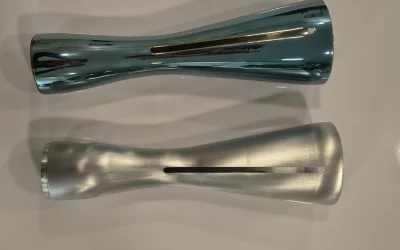
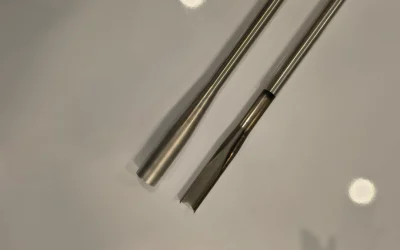
In the heart of industrial production, a flawless weld is essential. The strength and reliability of countless components depend on seamless joints. Yet even in the most advanced processes, irregularities can arise—these are what we call welding imperfections.
We’re not just talking about aesthetic flaws, but anomalies that can compromise the structural integrity and long-term performance of a product. Understanding welding imperfections, their causes, and their impact is crucial to ensuring the safety and durability of any project.
What are welding imperfections?
A welding imperfection is any deviation from the quality standards set by technical codes and industry regulations. However, it’s important to distinguish between a “discontinuity” and a “defect.” A discontinuity is a physical irregularity, while a defect is a discontinuity that exceeds acceptable limits.
Even seemingly minor flaws can evolve into critical weak points. That’s why identifying and preventing imperfections early is key to ensuring the structural integrity and reliability of the final product.
The most common welding imperfections
Welding imperfections come in various forms. Here are some of the most frequent types:
Cracks
Among the most severe welding imperfections, cracks are localized fractures in the weld metal or base material. They can be longitudinal, transverse, crater, or branched, and occur either hot or cold. Cracks drastically reduce the mechanical strength of the joint.
Porosity and blowholes
These are small gas-filled cavities that result from trapped gases during solidification. Often caused by inadequate shielding, surface contamination, or humidity, porosity weakens the weld and affects its appearance.
Solid inclusions
Foreign materials like slag or oxides can become trapped inside the weld. This is common in shielded metal arc welding and often results from insufficient cleaning or improper welding parameters.
Lack of fusion and penetration
Lack of fusion occurs when the filler metal doesn’t properly fuse with the base metal or previous weld passes. Lack of penetration happens when the weld does not extend through the full thickness of the joint. Both significantly reduce joint strength.
Undercut
This is a groove along the weld toe where the base metal has melted but not been filled. It reduces the effective thickness of the joint and concentrates stress, increasing the risk of failure.
Excess weld metal or burn-through
Too much filler material can cause irregular bead shapes, while excessive penetration may lead to burn-through—holes or protrusions on the opposite side—due to overheating.
Dimensional and shape defects
These include warping, overlap (unfused deposited metal), and underfill (insufficient filler metal). While some may be cosmetic, others affect function and fit.
Spatter
Small droplets of molten metal that solidify around the weld area. While often cosmetic, they may indicate unstable parameters and require post-weld cleanup.
What causes welding imperfections?
Knowing the causes of welding imperfections is the first step toward avoiding them:
Human factors
The welder’s skill, experience, and training are critical. Mistakes in torch angle, travel speed, or pool control can lead to defects. That’s why working with certified welders is always a wise choice.
Improper welding parameters
Incorrect voltage, amperage, travel speed, or shielding gas selection can cause a range of welding imperfections. Poorly calibrated settings lead to inadequate control of the arc and weld pool.
Inadequate joint preparation
Contaminants such as rust, oil, or dirt, or imprecise assembly, can cause porosity, inclusions, and fusion issues.
Environmental conditions
High humidity, drafts, or extreme temperatures can affect arc stability and weld pool behavior, increasing the risk of defects.
Equipment malfunctions
Faulty welding machines, damaged electrodes, or poor-quality filler wire can significantly impact weld quality.
How welding imperfections affect your project
The consequences of welding imperfections can be serious and costly:
- Safety and Reliability Risks: A defective joint may fail under stress, leading to structural or functional failure, especially in critical applications.
- High Rework Costs: Correcting defects involves time, labor, and materials. In some cases, defective parts must be scrapped.
- Delays and Downtime: Additional inspections and repairs disrupt production schedules, risking delivery delays and contract penalties.
- Reputation Damage: Delivering flawed products undermines customer trust and your brand’s reputation.
- Non-Compliance: Industries such as aerospace, food, or pharmaceuticals demand strict compliance. Welding defects can lead to regulatory violations and sanctions.
The best way to avoid welding imperfections
The most effective way to avoid welding imperfections is by relying on skilled professionals and strict quality control. Certified welders, proper joint preparation, correct parameters, and clean working environments all contribute to superior welds.
Want to ensure the highest welding quality in your next project?
Discover how our expertise in tube welding can elevate your production