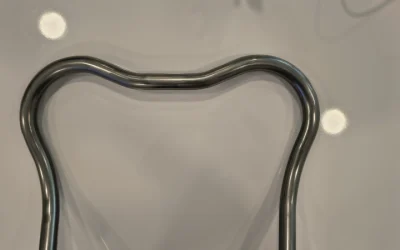
In our daily work, custom design often represents the answer to the needs of companies looking to manufacture high-quality components while keeping time and costs under control. It is not simply a matter of designing a part that differs from those already available, but of defining from the outset a solution that is compatible with materials, tooling, manufacturing processes, and assembly methods.
And it is precisely in these cases that custom design proves to be one of the most effective choices.
Designing a custom solution means starting from the customer’s actual requirements. We do not simply adapt existing solutions: we listen, analyse the context, and assess technical, mechanical, and economic constraints. This allows us to create a component that not only works, but integrates seamlessly into the system in which it will be used. The result? Fewer errors, less rework, and a smoother production cycle.
Designing with a Specific Purpose to Achieve Real Savings
Over time, we have seen how custom design can become a practical tool for reducing costs. We are not referring only to the cost of the individual component, but to the entire process: shorter assembly times, verified compatibility with existing systems and components, and materials selected accurately according to their actual application.
Standard parts often require adaptations or modifications that increase lead times and the risk of errors. By designing a custom solution, on the other hand, we can address potential issues from the earliest stages. We know which processes will be carried out, which tools will be used, and which tolerances are critical. This allows us to develop components that are easier to manufacture, assemble, and maintain.
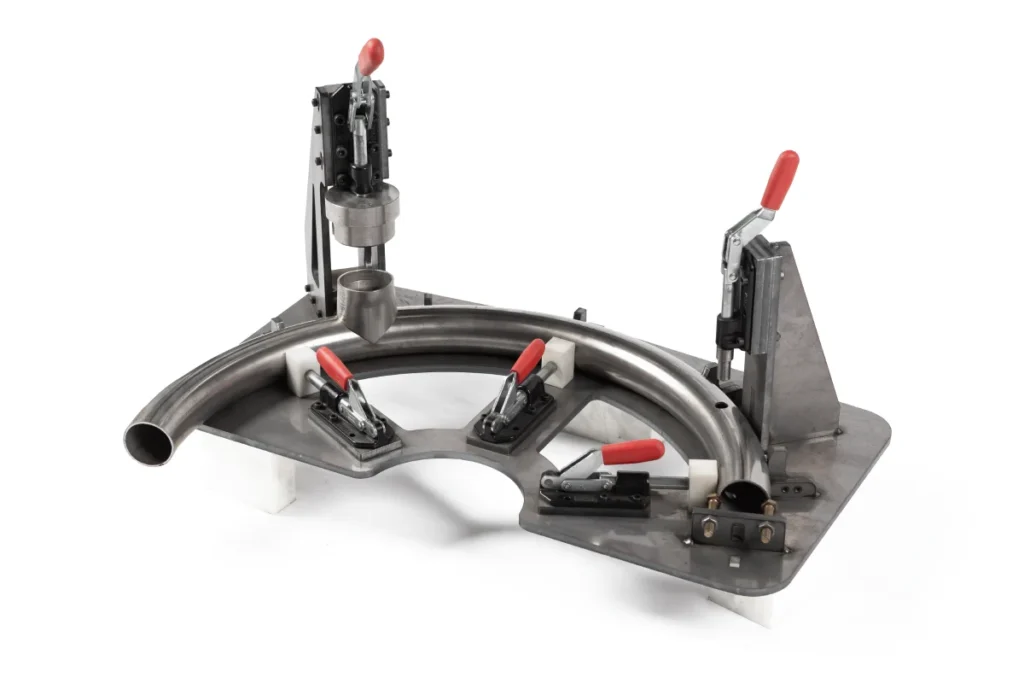
Dedicated fixtures, dies, and tooling can also play a decisive role in transforming a project into a stable production process. At Ricos, we can develop and fine-tune them internally through our milling, turning, and laser cutting departments. This allows us to reduce the number of steps involving different suppliers, respond more quickly to modifications, and coordinate the tooling with the actual characteristics of the component.

How Custom Design Reduces Time to Market
Custom design can reduce time to market when it makes it possible to address critical issues before the component enters production. Material, geometry, tolerances, and manufacturing sequence are analysed together, assessing from the outset whether the tube will need to be bent, formed, tapered, laser cut, welded, or machined.
In some processes, the ability to collect and use test data can also help speed up process setup. This is the case with AI applied to hydroforming, which at Ricos we use to support the definition of initial parameters and reduce the number of iterations required before industrialization.
This approach helps avoid discovering too late that a certain area is no longer accessible, that a hole becomes distorted during bending, or that a tolerance cannot be maintained after welding.
Reducing time to market does not therefore mean indiscriminately accelerating every stage. It means reducing late-stage corrections, unnecessary steps, and tests based on incomplete information, reaching a manufacturable and verifiable component more quickly.
Sampling Is Part of the Process, Not an Additional Step
One of the key stages of our work is sampling. This is when the project takes physical shape and we can directly test what has been designed, shared, and approved.
Having the first component in hand allows us to verify the geometry, the accuracy of the mating areas, compliance with dimensional requirements, and the material’s response to the planned manufacturing processes. If deviations or critical issues emerge, we can intervene before production begins, introducing targeted modifications that help prevent scrap or rework across the entire batch.
From the First Sample to Production: What Needs to Be Stabilized?
Custom design does not end when the first compliant component has been produced. To move into production, the result must be transformed into a stable and repeatable process.
During sampling, process parameters, component positioning methods, tooling, and dimensional inspection procedures are checked and, when necessary, corrected. It is also possible to determine whether the selected production sequence is genuinely sustainable in relation to the required volumes.
The objective is not simply to manufacture one correct sample, but to ensure that geometry, mating conditions, and functional characteristics can also be maintained across subsequent components. It is this transition from feasibility to industrialization that contributes directly to reducing lead times, scrap, and hidden costs.
From the Idea to the Finished Component: A Continuous Workflow

We do not deal only with the initial design phase: our approach involves complete process management. We support the customer from the initial idea through to final production, including material selection, technical drawing verification, machining operations, and quality control.
Each stage is connected to the next. For example, when we select a metal, we consider not only its mechanical properties, but also its compatibility with the planned processes: whether it will be bent, welded, cut, or hydroformed. This allows us to prevent technical difficulties and optimize the final result.
Designing a component without considering how it will actually be manufactured would be of little value. For this reason, every drawing we develop is created with production already in mind: dimensions compatible with the available equipment, geometries optimized to reduce machine time, and technical choices designed to simplify assembly or maintenance.
Fewer Errors, Greater Control, More Savings
Every error we are able to prevent translates into tangible savings for the companies we work with. Assembly errors, production scrap, and defects caused by imprecise designs are all situations we know well and address by starting with careful and detailed custom design.
A component developed with this approach can reach the subsequent production or assembly stages with fewer adaptations and corrections required. This can significantly reduce downtime and hidden costs: those that are often not considered in the initial quotation but have a real impact on the final economic result.
In addition, when a component is designed according to its specific operating context, it can offer greater reliability, respond more effectively to operating conditions, and reduce the need for corrective actions or unplanned maintenance. This can help extend the service life of the system or final product.
When “Custom-Made” Is the Only Viable Option
There are situations in which custom design is not simply recommended, but is the only sensible solution. This may be the case when a component has to be integrated into an existing system, perhaps an older one or one with unusual geometries. The same applies to prototypes for new products, where innovative shapes, functions, or materials are being tested.
Even in small production runs, a custom approach makes it possible to optimize each stage without necessarily relying on complex dies or standardized processes that are poorly suited to the actual quantities required.
What Information Is Needed to Start a Custom Design Project?
To make custom design faster and more effective, it is important to collect complete information about the component and its intended application from the outset.
The most useful information includes:
- a fully dimensioned drawing and a three-dimensional model, when available;
- the required material and its supply condition;
- dimensional tolerances;
- the function of the component;
- operating conditions;
- production quantities;
- the elements with which the component will be assembled;
- any already defined manufacturing processes;
- required inspections or certifications.
This information makes it possible to assess feasibility, compare possible alternatives, and define materials, tooling, and production sequence more accurately. The more complete the initial information is, the lower the risk of having to introduce changes once the project has already reached an advanced stage.
Designing with Care Means Producing Better
At our company, we have chosen to place particular emphasis on custom design because we know how much of a difference it can make. Not only from a technical perspective, but also in terms of collaboration. When we design together with the customer, every detail becomes clearer and every decision more informed.
For us, designing well is the first step towards producing better. It means reducing the risk of errors, optimizing lead times, and improving component performance. It also means building a collaboration based on shared technical decisions, practical verification, and more informed management of the journey from the initial idea to production.
Do you have a component to develop or a production process to optimize?
Discover our service for technical and mechanical design, or contact us to assess feasibility, materials, tooling, and manufacturing processes together.